Yoga Anatomy
Prone Poses
Joint Actions
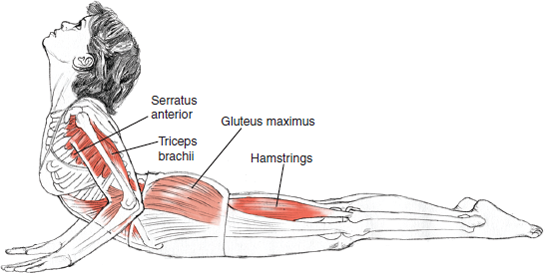
The spine extends, with the sacrum in counternutation. The hips extend, internally rotate, and adduct, while the knees extend and the ankles plantarflex. The scapulae remain neutral, possibly undergoing slight upward rotation. The glenohumeral joints externally rotate, the elbows extend, and the forearms pronate.
Working
The entire spinal extensor group—including intertransversarii, interspinalis, rotatores, multifidi, spinalis, semispinalis, splenius capitis and cervicis, longissimus, and iliocostalis—contracts concentrically to create spinal extension. The serratus posterior superior assists in chest expansion and supports the erector spinae, while the rectus abdominis and obliques work eccentrically to prevent excessive lumbar extension.
In the arms, the infraspinatus, teres minor, serratus anterior, posterior deltoids, triceps, pronator teres, and pronator quadratus engage to support the posture.
In the legs, the hamstrings, particularly the semitendinosus and semimembranosus, extend the hips while maintaining adduction and internal rotation. The adductor magnus (extensor portion) and deep/medial fibers of the gluteus maximus assist in hip extension without external rotation. The vastus lateralis, medialis, and intermedius extend the knees. Weak medial hamstrings can lead to excessive gluteus maximus engagement, causing external rotation or abduction of the legs.
Lengthening
In the spine, the rectus abdominis, obliques, external intercostals, longus colli and capitis, suprahyoid, infrahyoid, scalenes, and anterior longitudinal ligament lengthen.
In the arms, the latissimus dorsi, teres major, pectoralis major and minor, biceps, and supinators stretch.
In the legs, the rectus femoris, lower fibers of the psoas and iliacus, and tensor fascia latae lengthen due to hip extension.
Joint Actions
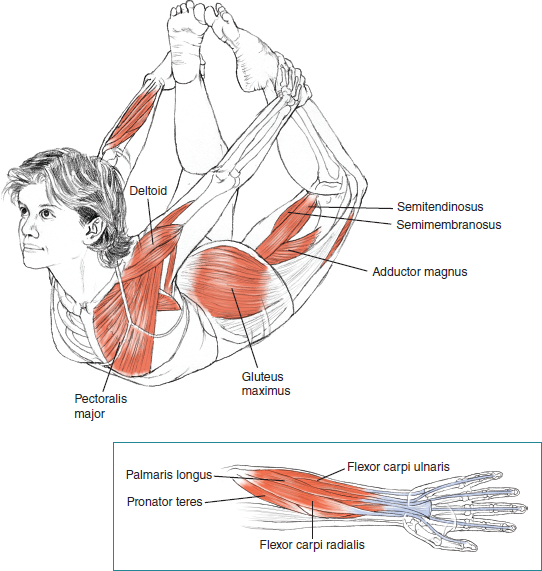
The spine extends, with the sacrum in counternutation. The hips extend, medially rotate, and adduct, while the knees flex and the ankles plantarflex. The scapulae adduct and elevate. The glenohumeral joints medially rotate, extend, and adduct. The elbows extend, the forearms pronate, and the fingers and hands flex to grasp the ankles.
Working
In the arms, the subscapularis, teres major, posterior deltoids, rhomboids, levator scapulae, and triceps stabilize the arm and scapula position. The pectoralis major and minor, coracobrachialis, anterior deltoids, and serratus anterior work eccentrically as they lengthen.
In the legs, the hamstrings (especially semitendinosus and semimembranosus), the extensor portion of the adductor magnus, and the deep and medial fibers of the gluteus maximus work to extend the hips. The vastus lateralis, medialis, and intermedius, along with the lower part of the rectus femoris, work to extend the knees.
Lengthening
Due to hip extension, the rectus femoris, lower fibers of the psoas, iliacus, and possibly the pectineus and tensor fascia latae lengthen.
Joint Actions
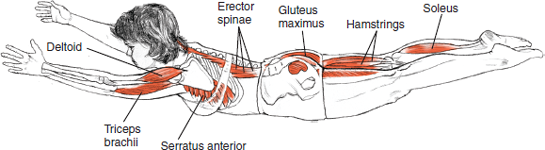
The spine extends, with the sacrum in counternutation. The hips extend, medially rotate, and adduct, while the knees extend and the ankles plantarflex. The scapulae upwardly rotate, elevate, and abduct. The glenohumeral joints externally rotate and flex. The elbows extend, and the forearms and wrists remain neutral.
Working
In the arms, the supraspinatus, long head of the biceps brachii, triceps, anterior and medial deltoids, serratus anterior, and trapezius work to lift the arms.
The spinal extensors—including the intertransversarii, interspinalis, rotatores, multifidi, spinalis, semispinalis, splenius capitis and cervicis, longissimus, and iliocostalis—engage to extend the spine.
In the legs, the hamstrings (semimembranosus, semitendinosus, and biceps femoris) and the deep, medial fibers of the gluteus maximus extend the hips. The adductor magnus keeps the knees together, while the vastus lateralis, medialis, and intermedius extend the knees. The soleus helps point the feet.
Lengthening
The latissimus dorsi, pectoralis minor, rhomboids, long head of the triceps, and rectus abdominis lengthen. Due to hip extension, the rectus femoris, iliacus, and lower fibers of the psoas also stretch.
Joint Actions
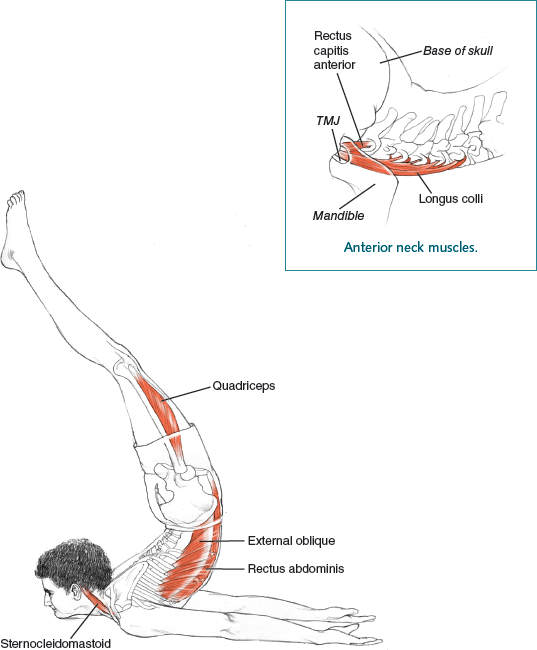
The spine extends, with the sacrum in counternutation. The hips extend, medially rotate, and adduct, while the knees extend and the ankles plantarflex. The scapulae downwardly rotate, elevate, and abduct. The glenohumeral joints externally rotate, flex, and adduct. The elbows extend, and the forearms and wrists remain neutral.
Working
Entering the Pose (Concentric Contraction):
Legs & Spine: The hamstrings, gluteus maximus, and spinal extensors actively lift the body.
Arms & Shoulders: The flexors of the glenohumeral joint, including the pectoralis major, anterior deltoid, biceps, coracobrachialis, and serratus anterior, engage.
Stabilization: The subscapularis works eccentrically to protect the glenohumeral joint.
Lengthening
Holding the Pose (Eccentric Contraction & Lengthening):
Legs & Core: The vastii (quadriceps), obliques, and rectus abdominis resist the pull of gravity.
Neck & Breathing: The anterior neck muscles (longus colli, longus capitis, rectus capitis anterior, suprahyoid, infrahyoid, scalenes, sternocleidomastoid) and the thoracic diaphragm lengthen and control the posture.